Showing posts with label survival. Show all posts

Saturday, 27 July 2013

Summer in Kagawa, Japan

Healthy rice-paddies on a hot Kagawa day. 

Seeing as I wrote an article on my experiences of Winter in Japan a little while back, I thought it would be appropriate to also spend a little bit of time talking about the Summer. I've written a little bit here and there on the subject in other posts, but I feel like it would take a full blog post on the topic to really do it justice.

I'm afraid, however, that Summer here isn't much more pleasant than the Winter.

Summer in Kagawa can be... difficult.

Not the most positive of starts, I know, but there's several approximations that make it more than a bit hell-esque. For starters, the temperature is about the same as you would expect from the Devil's lair: a relentless onslaught of heat and humidity which seems to last for an eternity. The devil's minions are also clearly present in the form of gigantic insects and giant green spiders that torment and seemingly target the foreign population (yet fascinate and please the school kids).

Hyperbole aside, it is hot. Very hot.


  • Heat and Humidity
The biggest challenge of Japanese Summer is quite simply the heat. According to my phone, the current temperature is 32°C, yet it feels far warmer than that because of the humidity in the air. Japan is an intensely humid country, and that contributes to a constant sweaty feeling throughout the summer months. The temperature is pretty much constant and only drops marginally in the evenings. It really is a heck of a challenge to stay hydrated, as you're sweating constantly and always in need of a glass of water. It goes some way to explaining why Japanese homes lack insulation (though, as I mentioned before, that causes serious inverse issues in the Winter, too).

Luckily, the handy air-con is on hand. Like in the Winter, I have this thing on pretty much constantly - though it is unfortunately consigned to one room. Normally I use it at 18°C, but unfortunately the heat typically builds up so much throughout the day that it can take a fair amount of time for the effects to be felt. In contrast, opening the window to try and cool the place down doesn't do much to help as the air coming inside is roasting and there isn't much of a breeze (though at least it freshens the air).

The Air-con is back online.

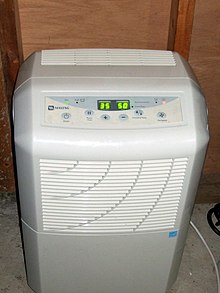
Supplementary to the air-con are a few other purchases that can be made. I recently picked up a fan for a very good price in my local Aeon Department Store. As my aircon is restricted to just one room, I often find myself blasting the fan into the kitchen when I'm in there preparing food for long periods of time. There are also dehumidifiers, which are far more expensive but very effective. When I visited Michael in Shizuoka last June, I was amazed at how much watch his managed to extract from the air - it looked like a litre in the space of a day.

 
My new fan (left) and a de-humidifier (right, image from here).
Michael had one of these in his place when I visited him in Shizuoka last year.

Traditional Japanese fans (uchiwa).

Of course, the old favourite in Japan is the hand-held fan (known as an uchiwa). These are not quite as common as you might expect during the Summer months, and I imagine its because they are often more ornamental than anything else. You do often see people waving paper equivalents, however, as they're often handed out while walking along the streets (usually these versions are plastered in advertising). They are very beautiful to look at and very pleasing to see when they are used.

  • Cold Treats
If you're anything like me, you'll agree the best way to deal with the heat (short of a cold shower) is in a refreshing beverage. Thankfully, vending machines in Japan are plentiful and on almost every street corner. In the summer time these become absolutely essential. On the weekends, I can visit them around two or three times a day (if I'm out and around town and nowhere near a store). Obviously, it's slightly pricier than buying from a store (costing between around 100円 to 150円 on average), but in the summer its a price you cannot afford not to pay, and 120円 is the standard price, which will get you pretty much anything at most machines (that's around 80p for you UK JETs).


Vending machines everywhere.

So many options.

I'm pretty much an addict on the canned cold coffee. Even though cold coffee isn't such a big thing in the UK (probably because it's so damn cold over there), it really is refreshing in the heat. If you're British and you haven't tried an ice coffee yet, I'd recommend you get yourself to Japan and try one of these (a few do have a pretty high sugar content, though, so some are a bit too sweet).

Cold treats are incredibly popular throughout the Summer, and with good reason.

Another alternative of course is to pop into a convenience store (or supermarket) and pick up an ice-lolly or ice cream. These are abundant and everywhere in Japan, with some very nice varieties available (including a Magnum equivalent and a banana-milk flavoured ice). The soda-flavoured "Gari Gari-Kun" is an all time favourite, but my personal preference is for the watermelon ices that creatively include little chocolate chips in place of seeds. It's very refreshing and just looks aesthetically great.

Watermelon ice-poles!

My reprieve from the heat.

Chocolate is difficult to keep during the summer months because it melts so quickly. Mostly it's best to keep it indoors in a fridge and only remove it when about to eat. Carry it around town and it'll almost certainly turn into goop.

Fruit is also difficult to keep (especially bananas) as the heat makes it wilt rapidly, and occasionally small little flies can get in through the open windows (even with a gauze up) which will make short work of them. On one occasion, I bought an apple from the supermarket at around 9pm at night, leaving it on my breakfast table with an intention of eating it the next morning at breakfast. I picked it up not long after sunrise to discover the lower half had turned to mush and was covered in little holes that a fly had made. Again, the fridge is your best friend here, but you really do struggle with bananas as they go brown so damn quickly in there. Best recommendation is to only buy fruit on the same day you intend to eat it.

A special delicacy of Kagawa-ken is, of course, the Sanuki-Udon. I quite enjoy udon noodles, but really only when they're hot. However, cold noodles are very popular during the summer in Japan, and as such cold udon is consumed en masse by loads of people in Kagawa. Sadly, I can't really eat the stuff myself: the texture just feels off-putting. Might be worth a try for a one-off, though.

Cold udon? No, thanks.
(Image from here.)

  • Schools and Summer Holidays
Katsuga Junior High School.

The schools I visit can become incredibly hot during the summer time. Like homes, the walls are designed to be very thin and lack insulation, but the humidity and heat is such that it doesn't make much of a difference, really. Windows are consistently open (though this does inevitably let all manner of bugs inside). The kids can visibly be a lot more tired during these months, and I find myself constantly sweating throughout the day and drinking a lot of water and cold ocha (Japanese tea). Some rooms come equipped with electric fans (though their range is pretty small) or air-con units. These help greatly but because many of the schools are quite old many rooms aren't equipped with these gadgets and typically teachers can be reluctant to use them.

The school swimming pools see a lot of action in the Summer time.

One benefit of summer is that students are given a lot of swimming classes, which I've never participated in but look like a lot of fun. In the intense heat, this would definitely be a welcome way to break up the day. I know if I was a student here that I would love these.

With regards to summer holidays, here we come to a huge cultural difference that you may find very surprising...

The school holidays in Japan aren't really holidays in the way that we in the Western world would conceive of them.

Basically, er, they're not really holidays.

Students participate in the sports clubs everyday.

In Japan, students and teachers still come to school every day throughout the Summer. While this might seem insane to most of us, it's the status quo over here. Students are often assigned homework to do throughout the holidays and are expected to participate in daily sports clubs either in the morning or afternoon. Teachers have a lot less work to do, and mostly just sit at their desks doing... stuff. Leave isn't automatically granted, and teachers typically need to take paid holidays to take days off (though of course, this being Japan, most teachers don't take their full allocation).

ALTs aren't exempt from this, and come to school to basically find work for themselves. Often times there really isn't much work to do, though a lot of ALTs work with some students to train them for the upcoming English speech contests which arrive at the start of the next semester. It can also be a good opportunity to prepare materials for the upcoming semester, though like Japanese teachers, many ALTs use this time to take their paid leave (which is very sensible as it avoids disrupting classes).

One nice thing is that, with school lunch not running, the teachers may often go for lunch together. I've had quite a few trips with various teachers to enjoy lunch together (typically udon), and they're a lovely way to spend time in the early afternoon.

It seemed bizarre to me when I first arrived in Takamatsu to sit at a desk when there is very little work to do, and to keep the school running when there aren't any classes, and I can't say my opinion on that has changed very much. Still, it's just the way it is. The atmosphere in these summer months is usually very relaxed, and teachers have a lot more flexibility with their time. It's not an unpleasant atmosphere.

  • Bugs and other Monstrosities
Japanese Summer is beloved by all manner of beasties. Everyday you'll encounter countless insects and bugs crawling all over the place as soon as you've left your door (I've already mentioned the flies getting in and destroying my fruit).
Cicadas are everywhere in the summer months.
(Image from here.)

Most prominent in the Summer months are perhaps the cicadas which make one hell of a deafening noise. They constantly sing throughout the summer months; big, clumsy guys who make a very constantly loud noise which is audible constantly throughout the day. They aren't unpleasant, really, but they often jump out and surprise you. They're a lot cuter than most insects due to their big size and clumsy behaviour. You know Summer has started when you start to hear the cicadas throughout the day (eventually you just start to tune it out). Unfortunately, a lot of ALTs I know have complained about sitting under trees and being taken by surprise by cicada urine dropping on them. Whether or not those claims are true I have no idea.

Far more unsettling are the giant green spiders that are everywhere.

Visions of hell.
(Image from here.)

These green spiders are everywhere throughout the Summer months. They grow to a pretty big size (up to around the size of a palm), and they're so numerous that they cover almost every tree, plant and doorway. Looking up at a train station could well induce nightmares into the faint of heart, and they occasionally take up shop on some of the vending machines, too (which can give you quite a fright). I've heard conflicting reports as to whether or not they're dangerous or not but the colour scheme definitely suggests that they aren't something you want to mess with.

Often times they create giant webs that can stretch across big distances, which unsuspecting people can walk right into. Other times, their webs dangle overhead, and another looking up can see the silhouette of a large spider looking down at them from the sky. On the plus side, they probably help to keep away quite a lot of the bugs around here.

Typically these guys hang around until October, and trust me when I say they are everywhere (though currently they haven't quite fully grown yet).

Somewhat worryingly, I've also started to see a small blue and yellow sparkling lizard running around near my front door. It looks absolutely lethal and I've never seen anything like it before. Here's hoping it keeps a distance...

  • Clear Skies and Sunshine
The ferry terminal at Sunport, Takamatsu.

If you're Scottish like me (or are from anywhere in Britain), you'll be familiar with Summer being a typically inconsistent season which is prone to the occasional burst of rain and overcast skies. Not that Summer is always dreary, but it can certainly be haphazard and there can be occasional long stretches without much in the way of sunshine.

Thankfully, one of the advantages of Japanese summer is absolutely gorgeous sunshine. It's fairly consistent almost every day, and Kagawa simply looks glorious bathed in the sunshine.

Not a cloud in the sky.

With the intense sunlight obviously comes a long of sunburn. Luckily for me I don't tend to burn so easily, but plenty of ALTs turn into beetroots during the summer months. Sun cream is probably necessary for long exposure (though I typically don't wear it as often as I should, which is admittedly very silly and probably a bit dangerous of me). Many Japanese women are known to carry umbrellas during the summer month, or otherwise wear very long sleeves, in order to avoid tanning; as you may know, pale skin can often be fetished in Japan (which is bizarre to me, since I know plenty of Scottish girls who are constantly trying to get a tan).

Japanese woman can often be seen carrying umbrellas to stay out of the sun.
Image from here.

So really, it's a trade off. You have beautiful scenery with almost no clouds around, but you're gonna have to accept you'll cook for it.

A visual metaphor for the sweat running down my back.
(Yeuch.)

  • Festivals
And of course, there are the summer festivals.

If there's any major redeeming quality to summers in Japan, it's these.


Dancing at Takamatsu Matsuri, 2012.

In Shikoku, there are three major festivals that I've made my way to over the last couple of years; Sakaide Matsuri, Takamatsu Matsuri and Awa Odori (in Tokushima, the next prefecture to Kagawa). There are also the much smaller festivals such as the Shionoe Firefly Festival which take place on a more local level. Each of these has it's own unique feel and events. Of course, these are all accompanied by the traditional layout of festival stalls, and encourage a healthy attitude of merriment (and perhaps a little bit of drinking on the side).

I'll be writing at length about the Summer Festivals I've visited in Kagawa in other blog posts, so expect to see more information on those soon.

  • Final Thoughts
As you can see, Summer is a month of mixed blessings. Beautiful weather, but frankly the heat and humidity is so intense than it kills all enthusiasm for it. Many Japanese people I speak to concede that Summer is one of their least favourite seasons, and I tend to agree (though I'd say it's about equal to Winter in that regard, as both are quite difficult in their own ways).

Fish swim in the pond at Katsuga Junior High School.

As I say, the summer festivals go a very long way to making up for the challenges the season entails, and some of the best things to do while in Japan. Sweating aside, it's well worth being in Japan at this time of year just to see (or participate in) those amazing spectacles.

And if you can get past the heat (which is difficult), there is honestly a tremendous amount of beauty to admire.

Sunset on the coast at Sunport, Takamatsu.

Angie stands on the beach near Kozai at sunset.

As an additional note: many Japanese people seem to believe that Japan is unique in having four seasons. I've often been asked questions such as; "How many seasons does Scotland have?". I'm always pretty perplexed by this. I always understood that pretty much everywhere on Earth had four seasons. 

I'm not sure where they're getting this from, but it's very peculiar.

Sunday, 25 March 2012

Volunteering in Tohoku - Part One: 'INJM' & Arriving in Ishinomaki

First published: 8 May 2012

Disclaimer: Please note that quite a few of these images were lifted from multiple sources. I didn't take enough photographs during my time in Ishinomaki, so while some of these photos are my own, I sure didn't take all of them!

 It's Not Just Mud! With the volunteers in Ishinomaki, Tohoku.
Rainer and I are on the left, while Dan is fourth from the right.

 On site in Tohoku!
The labour-intensive first day; already I look done in.

Around 7am on March 25th 2012, after an overnight bus from Shinjuku, my party and I arrived in Ishinomaki to begin our week of volunteer work in Tohoku, in the areas affected by the March 11th tsunami and earthquake last year.

Unless you were living under a rock, you'll know that the North East of Japan was struck by a devastating earthquake on March 11th. It was one of the worst disasters in the country's history, with thousands either killed or still missing. The event also caused an ongoing crisis at the Fukushima nuclear power plant and many other nuclear sites; a meltdown risk and the threat of radioation leaking into the environment. While earthquakes in this country are a regular occurrence, and tsunamis not unknown (the word tsunami, of course, being directly sourced from the Japanese language), the scale of this particular disaster was frightening. For all of it's technological development and dense infrastructure, it was a stark reminder of just how supsceptible Japan truly is to nature.

Sourced from a Google Image search; The tsunami at Tohoku.

The damaged streets on the coast of Shizugawa, Miyagi.
This area was almost completely flattened by the tsunami.

It was an event that turned all of the world's eyes onto Japan. I remember when I first heard of the event, as I was driving home from camera opping on a television shoot in Edinburgh. The news of an earthquake in Japan came through the radio as we travelled home; an immediate concern, as at the time I was hoping to move to Japan on the JET programme. When I arrived home and turned on the television, I remember feeling numb as I saw the images of the colossal tsunami wave ripping apart a country I so deeply admired. It was a horrifying moment, and one which deeply affected me.

Luckily, the international community was quick and resilient in it's aid efforts (with particular praise going to the Americans on this one, I must say!), and it wasn't long before the immediate crisis dissipated. Regardless, a lot of work remains to be done within the Tohoku region. Coming to Japan, I knew immediately that one of the first things I simply had to do was volunteer my services. While I'd struggled to find the time during my first six months in Japan, I returned from my Christmas visit to Scotland determined to fulfil what I felt was an important duty.

My chosen volunteer organisation; 'It's Not Just Mud'.

I had opted to volunteer with the organisation 'It's Not Just Mud' (AKA. INJM), based in Ishinomaki, appealed to me for a multitude of reasons. Firstly, the first-hand accounts I had heard from other JETs through their blogs and vlogs (particularly this one) had made a great impression on me. I had originally tried to apply to volunteer with Peace Boat, though I found the administration difficult to overcome and the fixed timelines for volunteering made it difficult for me to find a time slot that would suit my schedule. INJM offered flexibility - any dates could be acceptable with notice. Recruiting my travel companions Rainer Wessels and Danny Blackwell, our party of three registered and promptly purchased an array of protective goggles, workboots, thermal clothing, gloves, and other gear we reckoned we'd require (I also picked up a lovely blue jumpsuit to wear over my clothes... which proved to be lovely, warm, and lovely again). A few short weeks later, and we arrived.


I'll take a moment to talk about my volunteering companions in more detail...

Rainer Wessels; South African gent and engineer-turned-ALT.
He's no stranger to the pages of this blog.

Rainer Wessels has been a recurring name throughout this blog. A South African who formally worked as an engineer after graduating, Rainer came to Japan in search of new experiences and a change of scenery (though don't ask me why - I've been to South Africa, and it's beautiful!). Rainer has become one of my closest friends here in Japan and has been a frequent travel companion; he was very keen indeed to leap at the chance to volunteer in Tohoku. As it happens, his engineering skills came in incredibly handy - he was quickly promoted to work as our sub-team's leader on our workdays! I certainly think he enjoyed it.

Danny Blackwell! One of England's finest exports.
Seen here sporting his finest catalogue pose (photo by me!).

Danny Blackwell is a fellow Brit from England; a UK ex-pat who has travelled between countries in various teaching jobs for several years. Dan impressed me immediately with not only his Japanese proficiency but his fluency in Spanish (for anyone interested, he maintains a YouTube channel where he uploads videos of himself performing Spanish songs on his guitar). Having lived in Japan for a few years as an ALT, he will shortly be on his way to Argentina to indulge in his love of the Spanish language whilst studying for a Masters course. Dan is a fascinating guy who is no stranger to volunteer work, having worked recently with an organisation in Peru. His enthusiasm to participate thrilled me; I'd been waiting for an opportunity to chat to Danny at length, as I really wanted to get to know him better; he'd always struck me as such an interesting guy, and I was pleased to finally have a chance to spend more time with him.

We were all fairly tired upon arrival; the overnight bus had been reasonably comfortable but, of course, not as accomodating as a warm bed (or - indeed - a futon!). Awaking some time in the early morning due to a noticeable drop in temperature, I tried to doze in the chilly bus but just couldn't get myself back to sleep. My body protested heavily as I forced myself outside to the brisk air. It was cold, I was tired, and the last thing I wanted to do was fetch and carry my luggage for the week (which, of course, was exactly what I knew I needed to do). With a felllow group of volunteers, we waited by the collection point and were greeted by a quiet Frenchman named Yannick, who tightly packed us into his 4x4. After a bit of shuffling, we were ready to go.

The first impressions I had of Ishinomaki was that the town seemed to be in perfectly working order. Standing next to the bus stop where we'd come in, complete with it's fully functioning combini and vending machines, I could see no visible signs of the effects of the tsunami, and assumed that Ishinomaki was - for the most part - essentially back in working order. It felt like we could have been anywhere in Japan. Many of our party seemed to feel the same, as the tone was light as we made our acquaintances and began our drive through the streets. For the most part, the surrounding streets gave the same impression - a regular town, just slightly dull from the grey skies and cold. However, as we continued on our pathway through the city, the tone began to shift dramatically. The buildings and houses began to be either damaged and boarded up or outright ruined, eventually giving way to large patches of open area where only the foundations remained. Restoration work was ongoing on every side, with fully operational homes and businesses juxtaposed with dented shutters and green nets raised to catch falling debris. As we passed over a bridge, a giant stack of abandoned cars lay crushed by the side of the water.

We had entered Yannick's car feeling jovial and chatty; now, we were all silent, simply observing all of the damage around us. It was a sobering experience; a vast contrast from the luxury Rainer and I had experienced only hours before in the Keio Plaza Hotel. The reason for our visit was reiterated; Tohoku was still recovering, and though the eyes of the world's media have shifted elsewhere, there was still much work to be done.

From the INJM Facebook page; The front door of Casa INJM.

We arrived at the INJM base just before 8am, where we unloaded our luggage and swiftly changed into our work gear for the day. There was no time to shower, but given that the day would undoubtedly be work-heavy and sweaty, this didn't seem like much of a concern. INJM operates entirely from two houses that have been converted for their purpose following the tsunami. These houses were originally considered for demolition due to the damage they'd sustained, but INJM managed to acquire these locations and convert them into lodgings and a base for their volunteer activities. The houses were basic - with lots of damage to them - but certainly functional. The boys and girls were generally kept in two seperate houses. Needless to say, the girls got the house that's complete with electricity and lighting (our house had an extension flex with a few sockets, and a single bulb with a pull-cord hanging on the ceiling!).

 Dan prepares to bunk down in our accomodation for the week.
It got rather cold during the evenings.

The main house offers a vast kitchen and lounge space (complete with kettle!), as well as shower and clothes-washing facilities - it all felt very homely indeed. The One of the most notable near-institutionalised procedures was the evening trip to the local onsen (a great way to clean up and avoid taking up the showers). Additionally, dinner was served every evening to volunteers at a set time, with everyone sitting around tables in a style not unlike family dinners. Ample bedding was also provided (a necessity given the fact that we didn't have much heating!) - there were lots of futons and blankets provided for all of the boys in our quarters (I myself slept under 7 layers just to keep the cold out!). Waking up in the cold environment was always a pain, though, so generally we slept in our work-clothes for the next day, and relied upon evening showers to maintain a sense of being fresh. In actual fact, I know both Rainer and Danny were content not to shave during their time volunteering - I, however, insisted upon maintaining my good standards of personal grooming.

The daily schedule!

There was a genuinely wonderful community of volunteers, though certainly with a rapid turnover rate. Every day brought new faces, though I'm pleased to say they were generally all very pleasant ones. There were participants from all corners of the globe; many JETs and ALTs like myself, but also many native Japanese and individuals who had travelled from Malaysia, China, Scotland(!), America, Australia... it truly felt like an international community had united in their support for Tohoku. Many friendships and acquaintances were swiftly made before individuals quickly moved on. The INJM management were always moving around and chatting to the volunteers, too - it all felt very welcoming, with a supportive community environment.

 Dinner time! Enjoying a home-cooked meal
with many other INJM volunteers.

Participants took it in turn to voluntarily wash dishes and cook meals... I think, on reflection, this intimacy may be what gives INJM such a great reputation; it feels like there's a genuine connection and affection between it's leaders and it's participants, which allows it to thrive. I doubt many other organisations would give it's members this level of responsibility and such a comfortable environment to house them, along with the opportunity to enjoy a schedule which suits them. It really is a unique approach, and one which is easily accessible and accomodating. It's no surprise that there is a high rate of return volunteers, who keep coming back to offer more of their time for the cause.

 The INJM lounge!

 ...and a low-res / blurry shot, taken on my iPhone 4. Oh dear.

We were offered free breakfast in the lounge area(toast with an impressively wide variety of toppings), and were greeted by a whirlwind of fresh faces that we'd never seen before that appeared to have formed a small little community. We were greeted and welcomed by many of our fellow volunteers, and were rapidly assigned our task for the day with Trevor, one of the on-site leaders and a Canadian. We were to be working at the site of a new playground which would open on the following Saturday. It would be our job to transform the ground of concrete and stone into a child-safe environment, and to finish constructing the playhouse that would be mounted there.

This sounded like a great first project to get involved with; there are far worse ways to volunteer your time than to bring joy to some local children who've endured a great deal of hardship.

As the team popped on borrowed red-and-yellow jumpsuits (with myself sporting my blue variety for the first time), we climbed into Trevor's car and trundled along the road to our first day of work.

Saturday, 25 February 2012

Winter in Kagawa, Japan

I thought I should talk about Winter in Japan; or rather, really just the the climate! As I come from Scotland, which typically has a reputation for being rather cold (which it is!), many people suspect that Japan would probably have a warmer climate, and that Winter in this country would be a milder and less chilly season. While Takamatsu doesn't get much snow at all (so no seasonal snowscapes or skiing, sadly!), and so one would be forgiven for thinking that the cold seasons here would have been considerably less cold than what I was used to.

I'm afraid to say that this is definitely not the case. This Winter has been, perhaps, the coldest I have ever experienced.

A familiar sight in homes across Japan; the lack of insulation
means the heat from an air-con becomes a room's only warmth.

 
My air-con remote turned up to 30°C.
Standard setting for me.

You'll remember that I've previously commented on the extreme heat in Summer-time. When I first arrived in Japan, the most immediately striking thing (other than the language shift and the cultural differences) was the vast temperature difference. While Scotland usually sees a bit of sunshine and a few barbecues, Japan overwhelmed me with the brutal heat that caused me to sweat like I'd never done so before in my life. It was just a tad overbearing... yet it seemed to promise that perhaps this would be a year-round trend; generally warmer temperatures and perhaps a comfortable Winter. Unfortunately, this was not the case. The pleasantly cooler climate of November was merely a deception; December, January and February in Japan are cold.

So, what's the problem?

As I understand it, Japanese buildings are consistently lacking in insulation. The reason for this was described to me as a fear that heavily insulated buildings would amplify the heat in Summer, and therefore the solution was just to bear with the cool Winters as they were. I don't know how legitimate this is, but it's certainly the most common and logical explanation I've been offered on the subject.

This sounds reasonable enough in theory, but in practice it means that waking up every morning can be a gruelling experience - leaving the comfort of the duvet causes a system shock and shivers to shoot through me every single morning. From my point of view, the lack of central heating in most buildings seems the most unforgivable; a standard feature of many Western homes, only a few buildings in Japan benefit from this seemingly commonplace solution adopted by the rest of the world. If you were expecting the school classrooms might have this feature, well, I'm afraid around 95% that I've experienced don't.
  
The only solution that is usually offered within the home is the common air-con system on which I was so dependant in the Summer months. In Winter, the needs are inverted, and so the air-con system is designed to allow the flow of hot air, too, and to generate heat in a confined area. This does wonders to warm the living room area, but does absolutely nothing to heat the corridor or bathroom areas, which are outside of my solitary air-con's range and remain chilled every morning and night. The condensation on the inside of my front door and fridge every morning is actually wet to the touch; an image that pretty much sums up the situation for me.

It's actually reached the point where now, everyday, I wake up ten minutes before my standard alarm time, turn on the air-con for heating, and wait ten minutes for the living room to warm up. Then, it's a gruelling psychological battle to open the door through to the hallway and sprint in my dressing gown and slippers - whilst freezing! - into the bathroom for the morning shower. Furthermore, work days have become dominated by an excessive need to drink tea, coffee and ocha, for fear of freezing without the consistent intake of hot fluids.

It staggers me that Japan operates every year with this same damn problem.

There is one shining beacon of light in this rather miserable situation, however; Heat-Tech!

 Heat-Tech from Uni Qlo!

 
Heat-Tech shirts and socks; essential for surviving
the cold at Winter - both outdoors and in!

Not to offer too much of a plug, but Heat-Tech (appropriately labelled as 'Japan Technology') is sold at Uni Qlo stores around the country. Basically, these clothes are fairly skin-tight vests (both long and short-sleeve), leg-warmers, underwear and socks that are designed to retain heat and fit comfortably underneath your regular clothing. I have seen a few other versions of the same style of clothing available from other retailers, but I decided to place my faith in this brand.

Thus far, it has helped considerably. Every day, almost without exception, I wear these clothes under my work clothes to school - in addition to a jumper and a heavy wooly coat, scarf and clothes (and occasionally a beanie hat). Usually, around four to five layers (and a double-pair of socks). It's still cold, yes, but it's made the Winter season just that little bit more bearable, and for that reason I heartily recommend these items to anyone either visiting or living in Japan at Winter. Many of my friends recently wenk to visit the famous annual Snow Festival (Yuki-matsuri) in Hokkaido, supposedly the coldest part of Japan. All I can say is that I hope they brought plenty of Heat-Tech along!

The climate has recently began to show steady signs of warming up again, recently; temperatures are chilly but not quite so brutal, and I can get away with wearing slightly less layers to work everyday. It's still cold, but at least I can feel a tad more comfortable on my early morning sprints to the shower.

Of course, once the Summer comes back, I certainly won't have to worry about being cold anymore. Undoubtedly, though, I'll be spending just as much time complaining about the heat!

Thursday, 4 August 2011

Arriving in Takamatsu

First published: 2nd August 2013

Sunport, Takamatsu.

On Wednesday 3rd August, 2011, I arrived in Takamatsu City. My new home.

Takamatsu is a small city located in Kagawa prefecture on the island of Shikoku (in the south of Japan). As a coastal city, coming here was an extremely comfortable prospect for me due to my formative years in Kirkcaldy. Having lived by the coast for almost all my life (except for my years at university), Takamatsu felt seemed like it should be the perfect fit: a blend of the familiar and the new.

The first twenty-four hours in the city were quite while whirlwind.


Arriving and Introductions
After arriving in Takamatsu Airport around mid-afternoon, my fellow JETs and I were very switfly separated into our different groups. Some ALTs would be travelling to other nearby cities like Marugame, and our new CIR, Lindsey, would be travelling separately, too. For the five of us who remained (myself, Arran, Edwin, Hannah, and Ben), we would be picked up from the airport directly by our new supervisor at the Board of Education, Hiramatsu-Sensei.

Hiramatsu-Sensei proved to be an absolutely wonderful man. Greeting us with a warm smile, his genuine enthusiasm was infectious and worked wonders on our nerves. We were lead out to his car and once again hit with the sweltering heat. Takamatsu Airport on fairly high ground in mountainous terrain, are we were keen to get a look around, but the heat was overwhelming and we were pleased to simply enjoy the views as we drove into town.


Hiramatsu-Sensei would be dropping us off at our new homes one-by-one, and as we drove from location to location we got our first real view of the city. It really was spectacular, with gorgeous weather setting the scene perfectly. As it happened, I was the last ALT to be dropped off at my home, where I was met by my new school supervisor, Kanoh-Sensei. After a very quick introduction, we drove to the school where I would begin teaching the following week: Katsuga Junior High. Before I knew it, I was sitting down with the principal of the school in his office, drinking green tea and introducing myself. A massive shift from being in the Keio Plaza Hotel in Tokyo only a few hours earlier.

The Marunaka in Kozai near my home.
Image from here.

After visiting the school, Kanoh-Sensei took my over to the local Marunaka supermarket for me to buy my first food purchases and living gear. Being my first time in a Japanese supermarket, I had no idea how the layout worked or what any of the food labelling was, and the experience was surprisingly stressful. I was constantly asking for help, but managed to get some of the essentials (bread, milk, soap, etc.). Finally, I made my way back to my bare home. After emptying the bags, I collapsed on the mattress-less bed and fell asleep.

Evening Adventures


Hiramatsu-Sensei had planned to meet us all on our first evening to take us for dinner and to buy some bedding material for our homes. However, I woke up about half an hour late. With the Japanese reputation for punctuality, I thought something was wrong. I quickly got dressed and made myself presentable. It was getting later. After waiting and waiting, I assumed I must have missed them. I wondered what it would mean if I missed an appointment with my supervisor so early, and with no way of being contacted other than through my UK mobile phone (which was still working, but would cost an arm and a leg to use).

Making a bold decision, I headed out onto the streets of Kozai, with which i was completely unfamiliar. I used my memory's best guess to navigate myself back to a main road, where I found a family strolling at ease in the evening. Using my Japanese phrasebook as best as I could, I tried to communicate that I needed to find a phone. They managed to direct me to a local convenience store. Running from street to street, I felt utterly bewildered. It was dark, and I knew that if I got lost it could take me forever to make my way home. Thankfully, I found the store and a working payphone. Using a number I digged up from some old documents Hiramatsu-Sensei had sent me back in the UK, I made a call to his office - and realised I would have to struggle through in Japanese. With a phone in one hand and a phrasebook in the other, I tried my best to communicate my situation. The woman on the other end seemed to understand, and assured me everything was okay.

Afterwards, I called my mother back in Scotland, in need of a little reprieve.


I made my way back home with surprising ease, and lay down on my hard bed. Very quickly afterwards, Hiramatsu-Sensei and the other ALTs arrived. All that had happened was that it had taken longer than expected to collect all the ALTs. Hiramatsu-Sensei was impressed that I'd managed to call his office, as they'd contacted him after I'd called to make sure he was okay. Feeling very embarassed, the other JETs were simply amused.

We headed over to the main part of town, and picked up dinner and a few essentials (like bedding, for example). On the drive back to my new home, I fell asleep in the back of the car - exhausted.

First Morning in Takamatsu


The next day, I woke up feeling incredibly hot. I had turned the air-con on the previous evening, but the place felt hotter than ever. I made my way to use my shower for the first time, and after fiddling with it for a while to work out how it actually worked, I got dressed and ate breakfast from the supplies I'd picked up the day before. Shortly afterwards, fellow ALT Ben rang the doorbell to collect me. Hiramatsu-Sensei would be driving us to city office in order to meet some local ALTs. As soon as Ben stepped in through the doorway, he stepped back - horrified by the heat. Turns out, I'd actually messed up with the air-con, and had been heating the apartment all night rather than cooling it.

Frankly, we were both amazed that I'd survived.

In other morning calamities, I had accidentally put all of my fresh foods into the freezer and my frozen foods into the fridge the previous day. Whoops. Luckily, the milk defrosted rather rapidly in the intense heat.

Culture Shock Attack

When we arrived at City Office, we had several things to take care of. Firstly, though, we were introduced to two ALTs who had come down to meet us: Jasper (from Ireland) and Chaz (from the US). They were very friendly and talkative, and keen to put us at ease as new arrivals. I was shocked to see Jasper drink a tin of cold-tea, but soon realized that cold, tinned, caffeinated goods were not only common but delicious after trying it and buying one for myself.

Jasper and Chaz gave us a small tour around town. This was our first time in the central streets of Takamatsu City, and as we walked around it hit me just how different everything was. The street signs were covered in Japanese, and I was suddenly aware of just how little language I understood and the fact that I would be here for at least another year. As we walked around, more and more things started to unsettle me. To try and ease us in, Jasper and Chaz chose to take us to the local Starbucks at Kawaramachi Station. Even so, I was feeling the onset of culture shock and started to feel completely overwhelmed. It wasn't until we were sitting down in Starbucks and drinking cappuccino that I felt like my old self again.
Walk about town
We made our way around town as a small group, getting a feel for the local delicacies (such as Sanuki Udon noodles), the convenience stores, and the central park area. Jasper and Chaz were good company, and indulged me in lengthy conversations about my passion: films.

While my sense of the local geography was still way off the mark, I managed to begin to get a feel for the area. It made me a lot more comfortable and confident, though I still wasn't quite sure how I was going to be able to live here for a year. Jasper in particular was very reassuring. It was just nerves, and naturally it would take some time to settle in.

The Shotengai Shopping Street in Takamatsu.

I started to feel a bit like myself again; chatting away with new friends and even starting to phase out the loud background chirping of the cicadas. The heat was still overwhelming, but we were starting to get used to it with our prolonged exposure (and it was a good excuse to indulge in some ice lollies).

Following our small tour of the area, we soon made our way back to City Office to continue sorting through the long list of admin that needed to be taken care of. Still, rather than feeling over-whelmed, I finally started to feel like I handle on things. After having lacked a lot of control over my comings or goings over the past twenty-four hours - a natural necessity while we were so inexperienced - the prospect of being able to function independently in Japan greatly excited me.

Sunport Tower.

---

The subsequent days continued in a similar manner, with admin taking precedence and gradually finding ourselves introduced to more and more of the city. Before too long, we were on our own: equipped with phones, bank accounts, bikes and all manner of tools for getting from A to Z.

It was obvious it would take quite a while to get accustomed to everything in Japan, but I knew that I was definitely up for the ride.