.JPG)
Healthy rice-paddies on a hot Kagawa day.
Seeing as I wrote an article on my experiences of Winter in Japan a little while back, I thought it would be appropriate to also spend a little bit of time talking about the Summer. I've written a little bit here and there on the subject in other posts, but I feel like it would take a full blog post on the topic to really do it justice.
I'm afraid, however, that Summer here isn't much more pleasant than the Winter.
Summer in Kagawa can be... difficult.
Not the most positive of starts, I know, but there's several approximations that make it more than a bit hell-esque. For starters, the temperature is about the same as you would expect from the Devil's lair: a relentless onslaught of heat and humidity which seems to last for an eternity. The devil's minions are also clearly present in the form of gigantic insects and giant green spiders that torment and seemingly target the foreign population (yet fascinate and please the school kids).
Hyperbole aside, it is hot. Very hot.
- Heat and Humidity
Luckily, the handy air-con is on hand. Like in the Winter, I have this thing on pretty much constantly - though it is unfortunately consigned to one room. Normally I use it at 18°C, but unfortunately the heat typically builds up so much throughout the day that it can take a fair amount of time for the effects to be felt. In contrast, opening the window to try and cool the place down doesn't do much to help as the air coming inside is roasting and there isn't much of a breeze (though at least it freshens the air).
.JPG)
Supplementary to the air-con are a few other purchases that can be made. I recently picked up a fan for a very good price in my local Aeon Department Store. As my aircon is restricted to just one room, I often find myself blasting the fan into the kitchen when I'm in there preparing food for long periods of time. There are also dehumidifiers, which are far more expensive but very effective. When I visited Michael in Shizuoka last June, I was amazed at how much watch his managed to extract from the air - it looked like a litre in the space of a day.
.JPG)
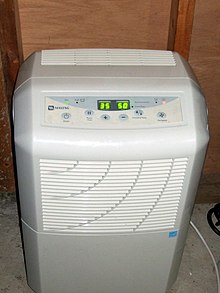
My new fan (left) and a de-humidifier (right, image from here).
Michael had one of these in his place when I visited him in Shizuoka last year.

Of course, the old favourite in Japan is the hand-held fan (known as an uchiwa). These are not quite as common as you might expect during the Summer months, and I imagine its because they are often more ornamental than anything else. You do often see people waving paper equivalents, however, as they're often handed out while walking along the streets (usually these versions are plastered in advertising). They are very beautiful to look at and very pleasing to see when they are used.
- Cold Treats
If you're anything like me, you'll agree the best way to deal with the heat (short of a cold shower) is in a refreshing beverage. Thankfully, vending machines in Japan are plentiful and on almost every street corner. In the summer time these become absolutely essential. On the weekends, I can visit them around two or three times a day (if I'm out and around town and nowhere near a store). Obviously, it's slightly pricier than buying from a store (costing between around 100円 to 150円 on average), but in the summer its a price you cannot afford not to pay, and 120円 is the standard price, which will get you pretty much anything at most machines (that's around 80p for you UK JETs).


Vending machines everywhere.

So many options.
I'm pretty much an addict on the canned cold coffee. Even though cold coffee isn't such a big thing in the UK (probably because it's so damn cold over there), it really is refreshing in the heat. If you're British and you haven't tried an ice coffee yet, I'd recommend you get yourself to Japan and try one of these (a few do have a pretty high sugar content, though, so some are a bit too sweet).

Cold treats are incredibly popular throughout the Summer, and with good reason.
Another alternative of course is to pop into a convenience store (or supermarket) and pick up an ice-lolly or ice cream. These are abundant and everywhere in Japan, with some very nice varieties available (including a Magnum equivalent and a banana-milk flavoured ice). The soda-flavoured "Gari Gari-Kun" is an all time favourite, but my personal preference is for the watermelon ices that creatively include little chocolate chips in place of seeds. It's very refreshing and just looks aesthetically great.

Watermelon ice-poles!

My reprieve from the heat.
Chocolate is difficult to keep during the summer months because it melts so quickly. Mostly it's best to keep it indoors in a fridge and only remove it when about to eat. Carry it around town and it'll almost certainly turn into goop.
Fruit is also difficult to keep (especially bananas) as the heat makes it wilt rapidly, and occasionally small little flies can get in through the open windows (even with a gauze up) which will make short work of them. On one occasion, I bought an apple from the supermarket at around 9pm at night, leaving it on my breakfast table with an intention of eating it the next morning at breakfast. I picked it up not long after sunrise to discover the lower half had turned to mush and was covered in little holes that a fly had made. Again, the fridge is your best friend here, but you really do struggle with bananas as they go brown so damn quickly in there. Best recommendation is to only buy fruit on the same day you intend to eat it.
A special delicacy of Kagawa-ken is, of course, the Sanuki-Udon. I quite enjoy udon noodles, but really only when they're hot. However, cold noodles are very popular during the summer in Japan, and as such cold udon is consumed en masse by loads of people in Kagawa. Sadly, I can't really eat the stuff myself: the texture just feels off-putting. Might be worth a try for a one-off, though.

Cold udon? No, thanks.
(Image from here.)
- Schools and Summer Holidays

Katsuga Junior High School.
The schools I visit can become incredibly hot during the summer time. Like homes, the walls are designed to be very thin and lack insulation, but the humidity and heat is such that it doesn't make much of a difference, really. Windows are consistently open (though this does inevitably let all manner of bugs inside). The kids can visibly be a lot more tired during these months, and I find myself constantly sweating throughout the day and drinking a lot of water and cold ocha (Japanese tea). Some rooms come equipped with electric fans (though their range is pretty small) or air-con units. These help greatly but because many of the schools are quite old many rooms aren't equipped with these gadgets and typically teachers can be reluctant to use them.
.JPG)
With regards to summer holidays, here we come to a huge cultural difference that you may find very surprising...
The school holidays in Japan aren't really holidays in the way that we in the Western world would conceive of them.
Basically, er, they're not really holidays.
.JPG)
In Japan, students and teachers still come to school every day throughout the Summer. While this might seem insane to most of us, it's the status quo over here. Students are often assigned homework to do throughout the holidays and are expected to participate in daily sports clubs either in the morning or afternoon. Teachers have a lot less work to do, and mostly just sit at their desks doing... stuff. Leave isn't automatically granted, and teachers typically need to take paid holidays to take days off (though of course, this being Japan, most teachers don't take their full allocation).
ALTs aren't exempt from this, and come to school to basically find work for themselves. Often times there really isn't much work to do, though a lot of ALTs work with some students to train them for the upcoming English speech contests which arrive at the start of the next semester. It can also be a good opportunity to prepare materials for the upcoming semester, though like Japanese teachers, many ALTs use this time to take their paid leave (which is very sensible as it avoids disrupting classes).
One nice thing is that, with school lunch not running, the teachers may often go for lunch together. I've had quite a few trips with various teachers to enjoy lunch together (typically udon), and they're a lovely way to spend time in the early afternoon.
It seemed bizarre to me when I first arrived in Takamatsu to sit at a desk when there is very little work to do, and to keep the school running when there aren't any classes, and I can't say my opinion on that has changed very much. Still, it's just the way it is. The atmosphere in these summer months is usually very relaxed, and teachers have a lot more flexibility with their time. It's not an unpleasant atmosphere.
.JPG)
The school swimming pools see a lot of action in the Summer time.
One benefit of summer is that students are given a lot of swimming classes, which I've never participated in but look like a lot of fun. In the intense heat, this would definitely be a welcome way to break up the day. I know if I was a student here that I would love these.
With regards to summer holidays, here we come to a huge cultural difference that you may find very surprising...
The school holidays in Japan aren't really holidays in the way that we in the Western world would conceive of them.
Basically, er, they're not really holidays.
.JPG)
Students participate in the sports clubs everyday.
In Japan, students and teachers still come to school every day throughout the Summer. While this might seem insane to most of us, it's the status quo over here. Students are often assigned homework to do throughout the holidays and are expected to participate in daily sports clubs either in the morning or afternoon. Teachers have a lot less work to do, and mostly just sit at their desks doing... stuff. Leave isn't automatically granted, and teachers typically need to take paid holidays to take days off (though of course, this being Japan, most teachers don't take their full allocation).
ALTs aren't exempt from this, and come to school to basically find work for themselves. Often times there really isn't much work to do, though a lot of ALTs work with some students to train them for the upcoming English speech contests which arrive at the start of the next semester. It can also be a good opportunity to prepare materials for the upcoming semester, though like Japanese teachers, many ALTs use this time to take their paid leave (which is very sensible as it avoids disrupting classes).
One nice thing is that, with school lunch not running, the teachers may often go for lunch together. I've had quite a few trips with various teachers to enjoy lunch together (typically udon), and they're a lovely way to spend time in the early afternoon.
It seemed bizarre to me when I first arrived in Takamatsu to sit at a desk when there is very little work to do, and to keep the school running when there aren't any classes, and I can't say my opinion on that has changed very much. Still, it's just the way it is. The atmosphere in these summer months is usually very relaxed, and teachers have a lot more flexibility with their time. It's not an unpleasant atmosphere.
- Bugs and other Monstrosities
Japanese Summer is beloved by all manner of beasties. Everyday you'll encounter countless insects and bugs crawling all over the place as soon as you've left your door (I've already mentioned the flies getting in and destroying my fruit).

Most prominent in the Summer months are perhaps the cicadas which make one hell of a deafening noise. They constantly sing throughout the summer months; big, clumsy guys who make a very constantly loud noise which is audible constantly throughout the day. They aren't unpleasant, really, but they often jump out and surprise you. They're a lot cuter than most insects due to their big size and clumsy behaviour. You know Summer has started when you start to hear the cicadas throughout the day (eventually you just start to tune it out). Unfortunately, a lot of ALTs I know have complained about sitting under trees and being taken by surprise by cicada urine dropping on them. Whether or not those claims are true I have no idea.
Far more unsettling are the giant green spiders that are everywhere.
Cicadas are everywhere in the summer months.
(Image from here.)
Most prominent in the Summer months are perhaps the cicadas which make one hell of a deafening noise. They constantly sing throughout the summer months; big, clumsy guys who make a very constantly loud noise which is audible constantly throughout the day. They aren't unpleasant, really, but they often jump out and surprise you. They're a lot cuter than most insects due to their big size and clumsy behaviour. You know Summer has started when you start to hear the cicadas throughout the day (eventually you just start to tune it out). Unfortunately, a lot of ALTs I know have complained about sitting under trees and being taken by surprise by cicada urine dropping on them. Whether or not those claims are true I have no idea.
Far more unsettling are the giant green spiders that are everywhere.

Visions of hell.
(Image from here.)
These green spiders are everywhere throughout the Summer months. They grow to a pretty big size (up to around the size of a palm), and they're so numerous that they cover almost every tree, plant and doorway. Looking up at a train station could well induce nightmares into the faint of heart, and they occasionally take up shop on some of the vending machines, too (which can give you quite a fright). I've heard conflicting reports as to whether or not they're dangerous or not but the colour scheme definitely suggests that they aren't something you want to mess with.
Often times they create giant webs that can stretch across big distances, which unsuspecting people can walk right into. Other times, their webs dangle overhead, and another looking up can see the silhouette of a large spider looking down at them from the sky. On the plus side, they probably help to keep away quite a lot of the bugs around here.
Typically these guys hang around until October, and trust me when I say they are everywhere (though currently they haven't quite fully grown yet).
Somewhat worryingly, I've also started to see a small blue and yellow sparkling lizard running around near my front door. It looks absolutely lethal and I've never seen anything like it before. Here's hoping it keeps a distance...
- Clear Skies and Sunshine

The ferry terminal at Sunport, Takamatsu.
If you're Scottish like me (or are from anywhere in Britain), you'll be familiar with Summer being a typically inconsistent season which is prone to the occasional burst of rain and overcast skies. Not that Summer is always dreary, but it can certainly be haphazard and there can be occasional long stretches without much in the way of sunshine.
Thankfully, one of the advantages of Japanese summer is absolutely gorgeous sunshine. It's fairly consistent almost every day, and Kagawa simply looks glorious bathed in the sunshine.
.JPG)
Not a cloud in the sky.
With the intense sunlight obviously comes a long of sunburn. Luckily for me I don't tend to burn so easily, but plenty of ALTs turn into beetroots during the summer months. Sun cream is probably necessary for long exposure (though I typically don't wear it as often as I should, which is admittedly very silly and probably a bit dangerous of me). Many Japanese women are known to carry umbrellas during the summer month, or otherwise wear very long sleeves, in order to avoid tanning; as you may know, pale skin can often be fetished in Japan (which is bizarre to me, since I know plenty of Scottish girls who are constantly trying to get a tan).

Japanese woman can often be seen carrying umbrellas to stay out of the sun.
Image from here.
So really, it's a trade off. You have beautiful scenery with almost no clouds around, but you're gonna have to accept you'll cook for it.

A visual metaphor for the sweat running down my back.
(Yeuch.)
- Festivals
And of course, there are the summer festivals.
If there's any major redeeming quality to summers in Japan, it's these.
If there's any major redeeming quality to summers in Japan, it's these.


Dancing at Takamatsu Matsuri, 2012.
In Shikoku, there are three major festivals that I've made my way to over the last couple of years; Sakaide Matsuri, Takamatsu Matsuri and Awa Odori (in Tokushima, the next prefecture to Kagawa). There are also the much smaller festivals such as the Shionoe Firefly Festival which take place on a more local level. Each of these has it's own unique feel and events. Of course, these are all accompanied by the traditional layout of festival stalls, and encourage a healthy attitude of merriment (and perhaps a little bit of drinking on the side).
I'll be writing at length about the Summer Festivals I've visited in Kagawa in other blog posts, so expect to see more information on those soon.
- Final Thoughts
.JPG)
Fish swim in the pond at Katsuga Junior High School.
As I say, the summer festivals go a very long way to making up for the challenges the season entails, and some of the best things to do while in Japan. Sweating aside, it's well worth being in Japan at this time of year just to see (or participate in) those amazing spectacles.
And if you can get past the heat (which is difficult), there is honestly a tremendous amount of beauty to admire.
.JPG)
Sunset on the coast at Sunport, Takamatsu.

Angie stands on the beach near Kozai at sunset.
As an additional note: many Japanese people seem to believe that Japan is unique in having four seasons. I've often been asked questions such as; "How many seasons does Scotland have?". I'm always pretty perplexed by this. I always understood that pretty much everywhere on Earth had four seasons.
I'm not sure where they're getting this from, but it's very peculiar.


